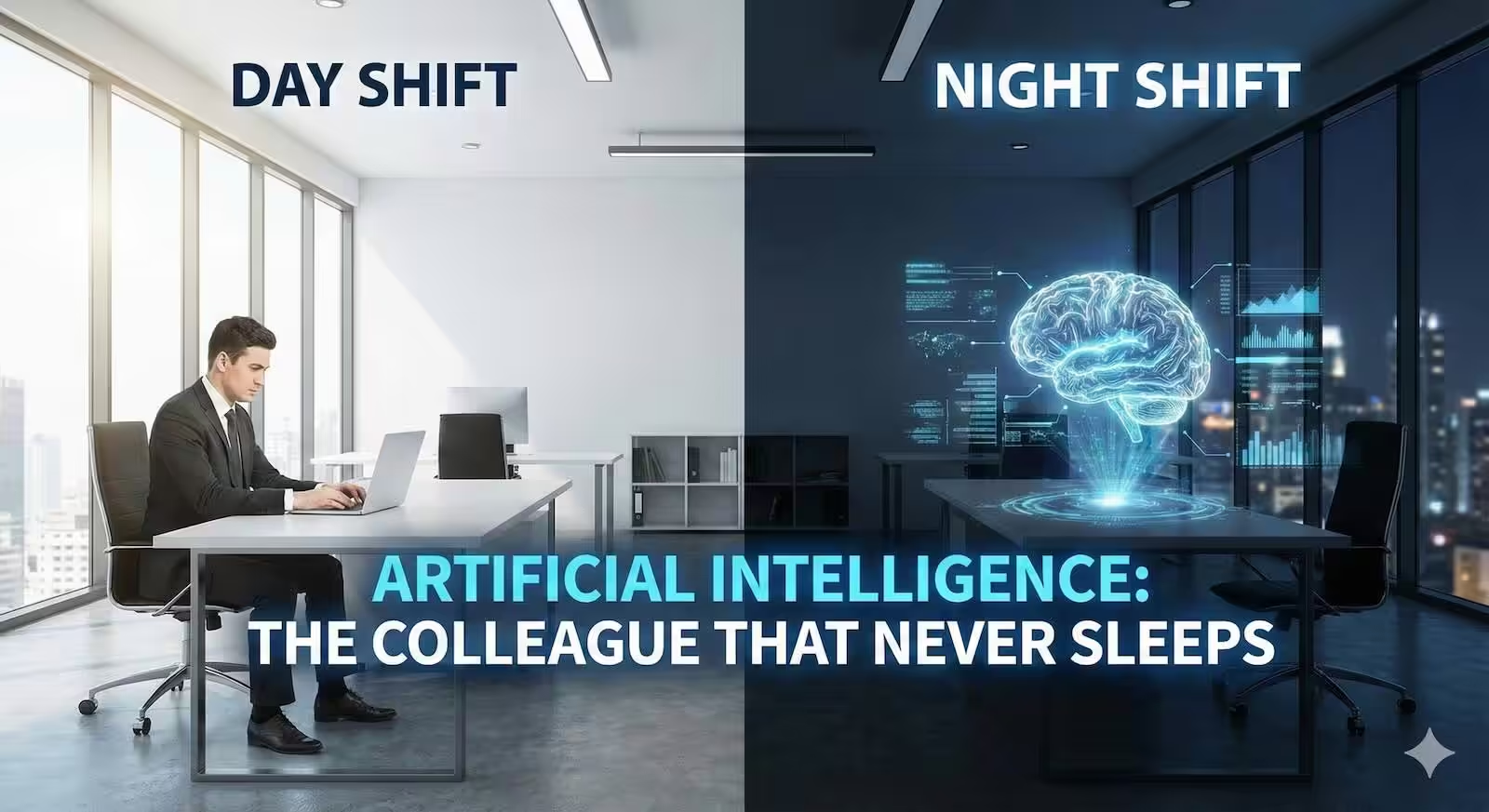
There was a time when being a Chartered Accountant meant ledgers, balance sheets, and long paper trails. Today, that image has evolved. Our profession is increasingly seen as technology-integrated, insight-driven, and strategically aligned. We’re now tech-savvy advisors, data interpreters, risk managers, and more. Technology has become part of our daily vocabulary – not a threat, but a tool. From AI-driven audits to blockchain-based reconciliations, our profession has embraced transformation. But this transformation hasn’t happened overnight
Table of Contents
Artificial Intelligence
Let’s begin with AI, perhaps the most talked-about (and misunderstood) development of our time.
When people talk about Artificial Intelligence, there’s often a sense of unease. “Will AI take our jobs?” “Will machines replace professionals?”
Let’s set the record straight.
AI isn’t here to replace Chartered Accountants. It’s here to work with us, not instead of us.
In practice, AI is doing more than automating tasks. It’s analyzing trends, spotting anomalies, flagging risks and even drafting reports in some cases. And it’s doing it all at lightning speed.
But here’s the catch: AI still needs human intelligence; it can’t replace professional skepticism. It can’t understand the nuances of a client’s situation or offer empathy during a crisis. That’s our domain. AI needs us more than we need AI to ask the right questions, validate the outcomes, interpret the context, and bring ethical judgment to the table. An AI system may predict that a transaction looks suspicious. But only a seasoned professional can explain why it matters, what the implications are, and how to respond.
So, the role of the Chartered Accountant is not being diminished; it’s being redefined. We are no longer just working harder, we’re working smarter, with AI as a trusted co-pilot. And most importantly, what’s heartening is how seamlessly Indian Chartered Accountants have embraced this shift. Many firms, from global networks to mid-sized practices, have integrated AI tools into their audits, risk assessments, and due diligence processes.
AI still needs human intelligence; it can’t replace professional skepticism. It can’t understand the nuances of a client’s situation or offer empathy during a crisis
Blockchain: Trust, Built into Code
If AI is the brain, then blockchain is the backbone of this new era.
In our profession, trust is everything. And blockchain, with its decentralized, tamper-proof architecture, offers a way to record and verify transactions with unprecedented transparency. For us, blockchain is more than a buzzword – it’s a breakthrough. Think about it: a system where every transaction is timestamped, verified, and locked in an immutable ledger. No backdating. No tampering. No ambiguity.
Imagine audit trails that create themselves. Contracts that enforce themselves. Records that update in real time across multiple parties. A world where inventory is automatically updated on a blockchain as goods move, and financial ledgers sync across borders in real time, all without human intervention. That’s not science fiction. That’s the new normal. That’s the power of decentralization and it’s already transforming areas like supply chain, tax compliance, cross-border trade and even real estate, where tokenization is enabling fractional ownership and seamless digital transactions.
In fact, many of us are already seeing this change on the ground, whether it’s advising a client on crypto regulations, or helping implement blockchain-based ERPs. Must Read: How to calculate net worth?