The world economy has long been shaped by the pervasive influence of the U.S. dollar, the world’s foremost reserve currency. Yet, a significant shift is underway, one that has taken root as nations aim to reduce their reliance on the dollar in international trade, financial transactions, and reserves.
This movement, known as “de-dollarization,” is steadily gaining momentum, driven by the desire for greater economic autonomy, resilience against dollar-centric policies, and the strategic rebalancing of global power. To fully grasp the implications of this shift , it is essential to understand the journey of how the dollar rose to global dominance and the factors now challenging its supremacy.
Table of Contents
The Post-World War II Economic Landscape
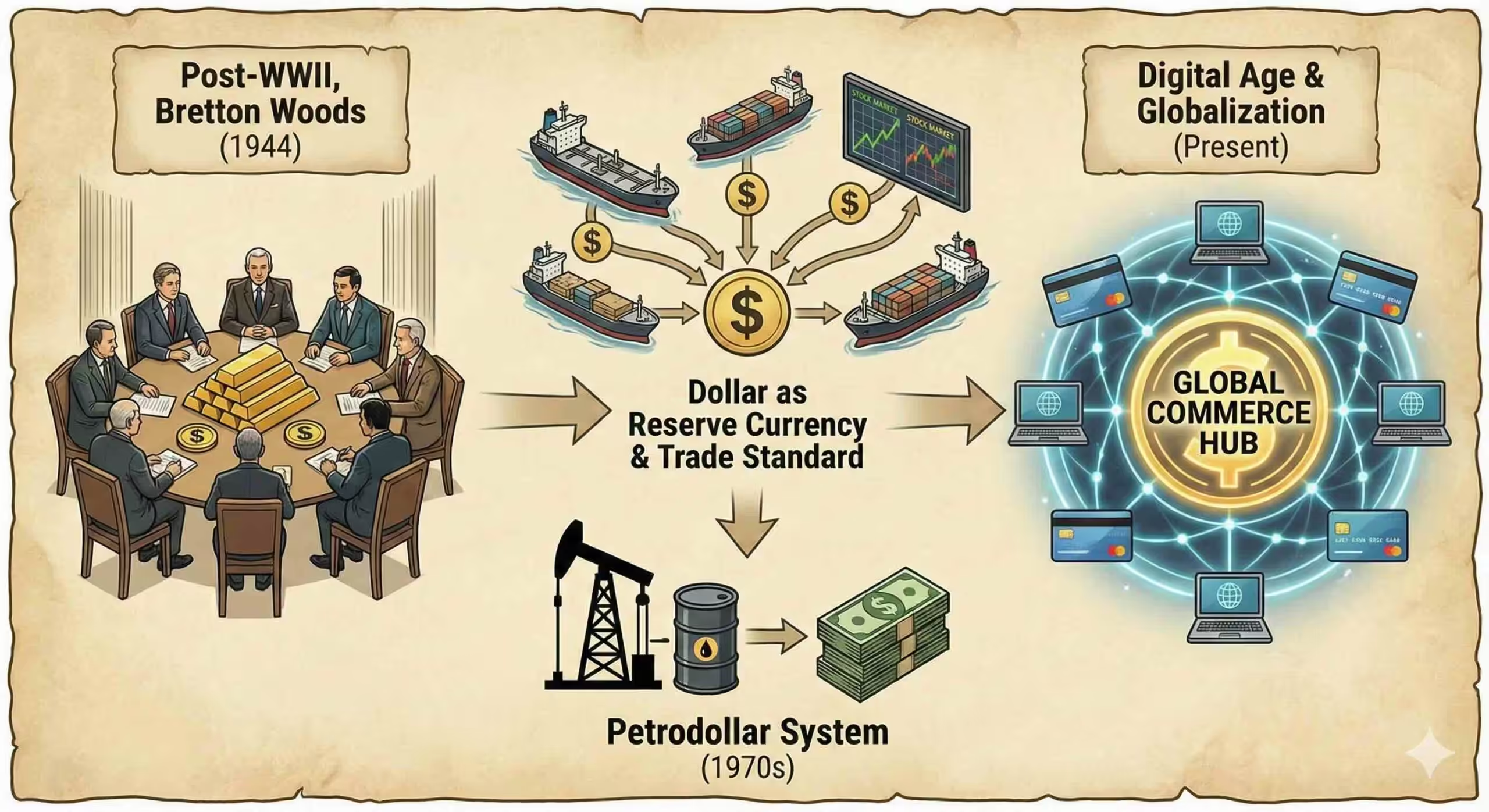
The story of dollar dominance begins aft er the Second World War, in which the United States emerged as a global economic superpower. The Second World War left Europe and Asia in economic ruins, while the U.S. economy thrived, largely untouched by the conflict.
This advantageous position allowed the U.S. to solidify its financial hegemony through the establishment of key international institutions like the International Monetary Fund (IMF) and the World Bank.
The Brett on Woods Agreement in 1944 was a pivotal moment that established the dollar as the anchor of the global monetary system, linking it directly to gold at a fixed rate of $35 per ounce. This agreement was designed to create a stable and cooperative international economic environment, preventing the competitive devaluations and protectionist policies that had contributed to the Great Depression and the rise of militarism in the interwar period.
Although the gold standard ended in 1971 under President Nixon, the dollar retained its position as the preferred currency for international trade and reserves, upheld by the sheer size and influence of the U.S. economy.
Strategic Economic Policies and Alliances
This dominance was further reinforced through strategic alliances and economic policies. The United States leveraged its monetary influence not only to shape global commerce but also to exercise considerable influence over geopolitics. Western countries, particularly the U.S. and the European Union, oft en used the dollar to create dependencies and steer global politics to align with their interests. Th is influence permeated regional politics, laying the groundwork for divides that still impact international relations today.
Consider Asia, where colonial legacies left deep divisions that Western powers oft en emphasized to retain control. For example, tensions between India and Pakistan, nations with shared histories but politically charged borders, have been sustained, in part, by Western interests. Western countries frequently provided arms and financial aid strategically to both sides.
India typically paid for its imports, while Pakistan oft en received foreign aid or loans, maintaining an imbalance that fostered rivalry. Such divisions prevented the kind of regional cooperation that could have made Asia a more unified economic powerhouse.
Th ese dynamics weren’t isolated to South Asia. Western powers also supported movements that fragmented larger countries internally. The encouragement of separatist sentiments, such as Khalistan in India, Tibet in China, and Baluchistan in Pakistan, further fractured unity in the region. The constant churning of regional unrest maintained dependence on Western military and financial power, perpetuating reliance on the dollar.
The Power of the Dollar in International Relations:
Symbolic and Practical Dominance
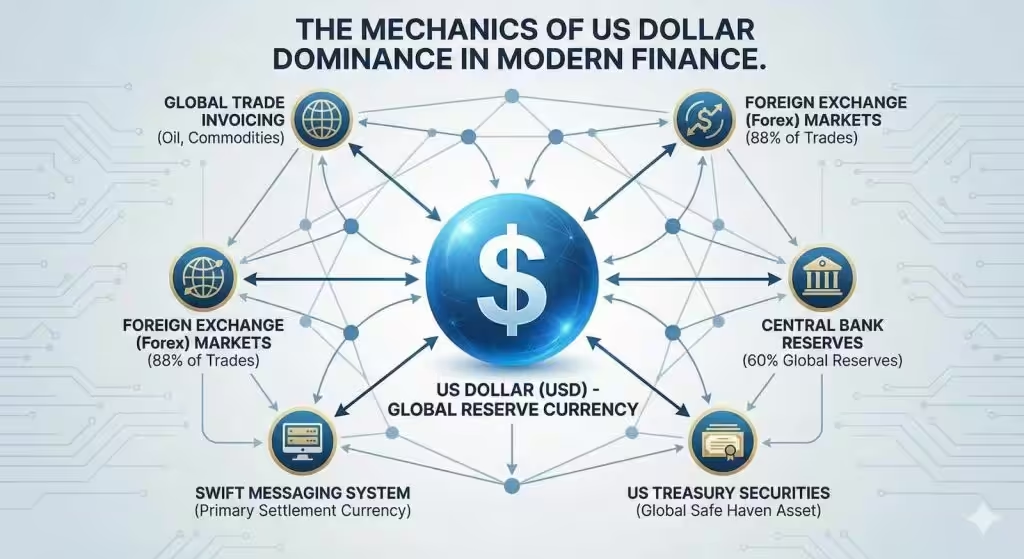
To understand dollar dominance in practical terms, imagine an international summit where leaders of major powers, the U.S., India, China, and Russia, share a meal. At the end of the meal, the U.S. graciously picks up the bill, opting to settle payment in dollars. This symbolic act of footing the global bill in dollars has become the standard protocol, repeatedly reinforcing the dollar’s status in international trade. Even if countries like China or Russia wanted to contribute in their own currencies, the existing system necessitates dollar transactions. Over time, the dollar becomes indispensable in global transactions, sidelining direct trade between nations.
This setup effectively granted the U.S. unparalleled financial freedom. With worldwide demand for dollars, the U.S. could print currency without the need to maintain an equivalent gold reserve or other assets, a luxury no other country could afford. As a result, the dollar’s role as the de facto global reserve currency provided the U.S. with an economic cushion that allowed it to expand and exercise influence worldwide, particularly through financial aid, military spending, and global investments.
Must Read – How Securitizing of Insurance Pools with Blockchain can work
Financial Leverage and Economic Policies
The dominance of the dollar also allowed the U.S. to implement economic policies with significant global repercussions. For instance, when the Federal Reserve adjusts interest rates, it has immediate and profound effects on global financial markets. Countries holding large reserves of dollars are directly impacted by these changes, which can influence their own economic policies and stability.
Additionally, the ability to impose economic sanctions using the dollar provides the U.S. with a powerful tool for enforcing its foreign policy objectives. Nations that rely heavily on dollar transactions find themselves vulnerable to these sanctions, further reinforcing the dollar’s central role in international relations.